Showing posts with label In. Show all posts

Friday, August 18, 2017

Chronic Pain In America


Today's post from updates.pain-topics.org (see link below) illuminates the massive problem of chronic pain, not only in the USA but all across the world. It's enormously costly, has effects on work productivity and social interaction and unless managed properly can directly affect the economy of a country. Why it happens is not discussed here but the fact that such a crisis exists begs the question; what can be done about it and why isn't it a top issue in government circles? Meanwhile, the pharmaceutical industry is not complaining - it's a cash cow for them.


Chronic Pain in America is a National Disgrace
Posted bySB. Leavitt, MA, PhD: Friday, July 1, 2011

Chronic pain affects more than a third of all citizens, it is widely undertreated or mistreated, patients are stigmatized, physicians are inadequately educated, and it costs more than half a trillion dollars each year in medical expenses and lost productivity alone. Those are just a few of the startling findings of a newly released report from the U.S. Institute of Medicine (IOM), which also proposes a multifaceted blueprint for action. The big question is, will something really be done about this public health crisis… and soon?

The 2010 Patient Protection and Affordable Care Act required the U.S. Department of Health and Human Services (HHS) to enlist the IOM in examining pain as a public health problem. The lengthy report, released on June 30, 2011 — Relieving Pain in America: A Blueprint for Transforming Prevention, Care, Education, and Research — calls for a cultural transformation of attitudes toward pain and its prevention and management. The entire consensus report is available [
here].

Among the many noteworthy findings of the 19-member committee assembled by the IOM are the following…
Chronic pain affects an estimated 116 million American adults — more than the total affected by heart disease, cancer, and diabetes combined. This is a much higher number than previously reported [see UPDATE
here] and, at that, it may be understated, since it does not include children or people living in institutional settings (eg, nursing homes, prisons). And, as ‘baby boomers’ age, it is expected that the incidence rate of chronic pain will continue to increase.

Pain costs the nation up to $635 billion each year in medical treatments and lost productivity. This, too, is most likely underestimated, since the costs of pain among institutionalized or non-civilian (eg, military) populations were not included. Nor were indirect costs — eg, lost employment, lost tax revenue, costs for replacement workers, etc. — and costs incurred caregivers (eg, family members who miss work while caring for a loved one in pain).

Chronic pain negatively affects socioeconomic status. Whether preventing sufferers from working or interfering with completion of education or training, chronic pain contributes to lower educational and income status, with disproportionate numbers of afflicted persons living below the poverty level.

The report notes that primary care professionals, who manage the bulk of patients with chronic pain, are undertrained and under-staffed for such purposes. Meanwhile, there is a severe scarcity of pain-care specialists and pain facilities to adequately treat patients in need. The IOM report notes that there are only about 3,500 physicians board certified in pain care — equal to 33,000 people with chronic pain for every specialist — and fewer than 200 accredited pain care facilities in all of America. Four out of five patients with severe chronic pain have never been referred to a specialist practitioner or clinic for their conditions.

The IOM panel writes extensively on what they call the “Opioid Conundrum.” While acknowledging that the long-term effects and effectiveness of opioid therapy are uncertain, they also point out that “Federal and state drug abuse prevention laws, regulations, and enforcement practices have been considered impediments to effective pain management….” Among other barriers, they say “Twenty-nine percent of primary care physicians and 16 percent of pain specialists report they prescribe opioids less often than they think appropriate because of concerns about regulatory repercussions.”

The report observes that, “Ironically, while many people with pain have difficulty obtaining opioid medications, nonmedical users appear to obtain them far too easily.” However, the panel also states in italics for emphasis that “the majority of people with pain use their prescription drugs properly, are not a source of misuse, and should not be stigmatized or denied access because of the misdeeds or carelessness of others.”

The IOM committee offers a blueprint for action in transforming prevention, care, education, and research, with the goal of providing relief for people with pain in America. They say that more data and research are needed, and that the nation must adopt a population-level pain prevention and management strategy. At the same time, however, the committee acknowledges that federal dollars for programs and research are “in short supply and likely to decrease.” Still, they state, “Given the burden of pain in human lives, dollars, and social consequences, relieving pain should be a national priority.”

COMMENTARY: The IOM Report is extensively researched, elegantly written, and thought-provoking. Clearly, there is a crisis of chronic pain in America and its long-standing neglect is a scandalous disgrace. The committee recognizes that there are many barriers to pain care, including regulatory, legal, institutional, financial, and geographical — all of them factors that not only limit access to effective pain care but contribute to disparities among select groups, most notably but not exclusively the financially and/or socially disadvantaged.

The committee calls for government agencies, healthcare providers, and public and private funders of health care to adopt a comprehensive, strategic approach to reduce or eliminate the barriers to pain care. However, while this may be rhetorically inspiring, putting such ideology into everyday practice at grass-roots levels is another matter.

It is particularly disconcerting in the report to find a rehash of the usual “doom and gloom” statistics pertaining to the alleged rates of misuse, abuse, diversion, overdose, and mortality associated with opioid analgesics. Many of the data come from surveys and reports that are outdated, inaccurate, and/or biased — a remarkably low quality of evidence — and it was hoped the committee would take a more critical look at the research or at least question its veracity. Apparently, they had neither the time nor inclination to do that; although, their overall perspective on opioids does achieve a measure of balance and they acknowledge certain inequities.

What is most striking in the IOM report is the tremendous toll in human suffering and financial burden inflicted by pain in America. With a third of the population affected directly, and many more when one includes families of persons with pain, this could easily serve as a major campaign platform for eager politicians. A lot of votes could be at stake; so, perhaps someone will take up the cause.


http://updates.pain-topics.org/2011/07/chronic-pain-in-america-is-national.html

Tuesday, August 15, 2017

Parenting While In Chronic Pain


The final 'self-help' post of the week from theatlantic.com (see link below) looks at dealing with pain when children are involved. Children cannot understand other people's pain the way that adults can and sometimes parents forget that their children may be confused as to why mum or dad is always seeming to be ill and doesn't have enough energy to spend time with them. Children also often try to hide their own needs when it's obvious their parents are having problems and that can't be healthy for them either. This article highlights the problem and may help some parents seek answers to a problem they may have underestimated.


Parenting Through Chronic Physical Pain 
 
Rachel Rabkin Peachman Jan 6 2014,

Studies say that when parents are in pain, children suffer. I push my body as hard as I can.

I closed the door on my wailing toddler and left her standing in her crib, reaching out for me. Her cries intensified, like the siren of an ambulance getting closer and louder until its howl drowns out everything else. I walked away and broke down crying. My daughter was sick, and I desperately wanted to soothe her. But I just couldn’t stand and rock her for one more minute to help her get to sleep. My broken body had reached its limit.

I’ve had back pain for much of my life caused by scoliosis, a curvature of the spine. And that afternoon, I felt my back would break if I cradled my daughter’s squirming 25-pound body any longer. I had to give up. My miserable best was to leave the room.

Because of my pain, I was causing my daughter additional suffering—and if recent research is right, this may be only be a harbinger of what’s to come. Experts from Kent State University in Ohio recently did a review of scientific literature examining how children are affected when their parents are in chronic pain. The results, published in the Journal of Child and Adolescent Psychiatric Nursing, are, well, painful to read. It turns out that children whose parents experience chronic pain are at increased risk for adjustment problems and behavioral issues, and are more likely to complain of pain themselves. The whole family suffers. When parents had chronic pain, children often hid their true feelings and needs, and lived in fear of stressing their parents out.

A close look at some of the studies on this topic rocked me to my core. In one study published this month in the Journal of Nursing Scholarship, researchers interviewed a group of 30 adolescents who grew up with parents experiencing chronic pain. In many cases, the children felt their parents were uninvolved physically and/or emotionally, and more likely to be irritable, hostile, and unpredictable. Because of this, the children often hid their true feelings and needs from their parents, lived in fear of stressing their parents out or causing their parents pain, took on a caretaking role before they were ready to do so, and questioned whether they were to blame for their parents’ suffering. The children and young adults dealt with these feelings in various ways—becoming perfectionists, retreating in silence, or turning to substance abuse. Reading these outcomes broke my heart.

Another study—this one published in the Journal of Pain in 2006—compared 39 mothers with chronic pain to 35 pain-free mothers. The mothers with chronic pain reported that they were more likely to be lax in their parenting and that the quality of their relationships with their children suffered compared to mothers without pain. A 2012 study published in Pain examined 3,227 teenagers whose parents had chronic pain. Researchers found that if both parents experienced chronic pain, girls were particularly at risk for anxiety and depression compared to girls whose parents were pain free. What’s more, if it was the mothers who were in pain, girls were also at a greater risk for conduct problems in school.

If that weren’t tough enough to take, two separate studies—one in the Archives of Pediatrics & Adolescent Medicine published in 2012, and another in JAMA Pediatrics published in 2013—assessing 5,370 teens and 8,200 teens respectively, found that children whose parents have chronic pain are at greater risk for feeling chronic pain themselves. Researchers don’t know if this is due to genetics or a learned behavior pattern, but whatever the reason, the children are still in pain.

Before having children, I didn’t consider how my pain might affect my parenting. But one of the many things I couldn’t grasp until I lived it is that being a mother is demanding physical work, especially if you’re one of the 100 million Americans with chronic pain.

For me, the pain developed gradually. From ages eight to 16, I wore a brace under my clothes in an attempt to steady my S-shaped spine. Initially, the hard plastic brace kept my spine in line, like a stern headmaster forcing a malleable student to conform. But the curvature, like an unruly teenager, couldn’t be contained. As an adult, it continued its wayward path, which made pain a constant inhabitant in my body, taking up residence in my back, shoulders, neck, and head. How does a mother suppress her instinct to hold her child when those little arms reach out?

After a strenuous pregnancy with my older daughter (now five), the pain took on a new dimension. Within two years of hoisting my precious cargo into her stroller and high chair, and yes, standing and rocking her to sleep—my body buckled under the strain. Back spasms made it impossible for me to stand or walk for long stretches and sometimes put me out of commission all together. Neck stiffness stopped me from turning my head, shoulder pangs kept me from lifting my arm, and my fingers tingled. I got through my days by popping anti-inflammatory medication, and I spent nights laid up with a heating pad.

Yet whenever my daughter reached for me, I was there with open arms. When my husband was home, he’d often urge me to let him carry her, but all I could think was, “How does a mother suppress her instinct to hold her child when those little arms reach out?”

A scoliosis specialist recommended corrective spinal fusion surgery but after scheduling a surgery date, I learned that the risks of the invasive procedure may not be worth the potential benefits. The surgery would involve cutting open my back, inserting steel rods into my spine, taking a bone graft of my hip, and fusing the vertebrae together to straighten and stabilize the curve. Under the best of circumstances this surgery could lead to complications, cause pain in other areas, and may eventually necessitate a second surgery. Plus, after the operation, I’d barely be able to move for three months, or carry my daughter for a year. Who would dance with her in music class or tuck her into her crib? What if the surgery caused nerve damage, paralysis, or worse? Sure, the physical demands of parenting were backbreaking, but at least I was there to attempt them. I cancelled my surgery date and decided I’d deal with the pain.

Fast-forward a few years—to that afternoon when I couldn’t rock my younger daughter to sleep. My worst symptoms were flaring up, and I couldn’t see how I’d carry us through this time. I sat on the couch, muscles clenched, listening to my toddler cry, distraught that I was of no use to her and could even be causing her harm.

Then, mercifully, she stopped. I checked the baby monitor and saw she’d finally fallen asleep, her arms holding her pink baby doll. My muscles relaxed, and I thought of the pain-free moments I have with my daughters—talking, singing, laughing—moments that strengthen me. I envisioned our cozy weekend mornings, snuggled up, both girls on my lap, enveloped in the soft red blanket that’s big enough to cradle us all.

Science may say the odds are against parents with chronic pain. And I know there are days I’m sidelined and short-tempered. But I’m determined to raise children who feel supported, secure, and loved. I don’t know what my future holds—surgery, therapies, or a lifetime of pain. But I have to believe that despite a deteriorating body, it’s possible to be a successful mother.

I’m still the one my girls reach for—and I refuse to let the pain take that away from me. Motherhood may have weakened my body but my love for my daughters has strengthened my spirit. Per doctor’s orders, I monitor my curve, which has taken us all on a winding ride. And I’m acutely aware that as surely as my curve will grow, so will my children. In a flash, they’ll be older—no longer reaching for me, asking me to carry them, rock them, and hold them. So I push my body beyond its limits now, damn the curve, damn the pain. I carry my girls when I can, rock them for as long as I can, and hold them tight.

http://www.theatlantic.com/health/archive/2014/01/parenting-through-chronic-physical-pain/282543/

Thursday, August 3, 2017

What Is The Common Link In Most Neuropathies


Today's post from neuropathydr.com (see links below) is a two part article from Dr John Hayes Jr, who is a very well respected practitioner with a vast experience of neuropathy treatment. He maintains that the common link between neuropathies is a loss of oxygen at neuronal junctions and it is not enough to simply categorise neuropathy as either peripheral, autonomic or idiopathic. More study is needed into the true etiology of the condition thus leading to much needed new approaches to treatment. Well worth a read and an inspiration for further research.

What’s the Common Link in the Neuropathies? – Parts 1 & 2
Posted by john on September 23, 2010

The common link in all of these peripheral neuropathies, regardless of the cause, appears to be hypoxia.

Hypoxia is simply a word that describes loss of oxygen. This occurs at what are called the neuronal junctions. That is, the areas in the human body where one nerve cell communicates to another.

At a simplistic level, nerve cells communicate electrochemically across a gap. In neuropathy caused by hypoxia, this neuronal gap widens, which is theorized to be responsible for the symptoms that include not only the burning and the tingling but the shooting pains as well.

Neuropathy and chronic pain is characterized by pain, numbness, loss of tactile feedback, and poor tissue perfusion. These symptoms may indicate that oxygen is not getting to all the cells causing dysfunction.

Because the patient’s quality of life is decreased, these results are often devastating. Pain medications do not cure the condition; it only helps mask it and, eventually, leads to complications with adverse side effects such as mental confusion and intestinal problems.

As a result of conducting our own research and reviewing published studies from around the world, we have been led to new models concerning the causes of neuropathy and chronic pain. We have concluded that it is not reasonable to merely label neuropathy and chronic pain symptoms as diabetic, peripheral, vascular, or “idiopathic”. What is needed is a more full understanding of the etiology of the condition so new technology can be brought to bear with both ameliorative and therapeutic benefits.

What is the Common Link in Neuropathies? – Part 2


Posted by john on September 24, 2010

Neuropathy and chronic pain results when nerve signal propagation is reduced between adjacent nerve cells due to insufficient oxygen being available to support nerve cell metabolism. This is responsible for 90% of all neuropathy and chronic pain cases. The remaining 10% is caused by physical trauma. Thus it appears that the main precipitating factor for neuropathy and chronic pain is hypoxia and demineralization of the synaptic fluid which creates shrinkage of the nerve cells which widens the gap between these cells making it more difficult for normal sensations to propagate, and loss of electrical conductivity in the synaptic fluid itself.

A temporary hypoxia of nerve tissue can be traced to most causes of neuropathy and chronic pain. The primary negative effects of this hypoxia are as follows:
A defensive contraction of the nerve cell resulting in oversize synaptic junctions
A loss of electrical conductivity of the synaptic fluid between nerve cells
A defensive change in the electrical potentials of the cell membrane resulting in a higher resting state of the trigger level which effectively limits the sensitivity to incoming signals

For example, when the lumbar area experiences a muscle spasm, blood flow is restricted through that muscle resulting in reduced oxygen availability to the surrounding tissue, including nerve cells. Because muscles can use either oxygen or glucose metabolic pathways, they can recover quickly from a temporary reduction in the level of available oxygen. Nerve cells, on the other hand, are limited to the Krebs oxidative reductive metabolic system and must take immediate defensive steps to assure survival during this hypo oxygen state. One of the ways they accomplish this is to contract along their longitudinal axis like a rubber band, reducing their surface area and thus lowering their need for oxygen. (This also occurs when these cells are attacked by a harsh agent in the blood such as chemotherapeutic drugs, Agent Orange, environmental toxins, insecticides, etc.) The synaptic junctions between the axons of one nerve cell and the dendrites of the next nerve cell widen. Normal nerve transmission is now compromised because a nerve signal of normal intensity cannot jump this newly widened gap. The synaptic fluid between the nerve cells must be electrically conductive. Pure water does not conduct electricity, so this conductivity relies on minerals and specific neurotransmitters such as serotonin in the synaptic fluid to enable the propagation of the nerve signal. These minerals are delivered via the perfusion of adjacent tissues with fresh blood and kept in suspension by the periodic ionization of successfully transmitted nerve signals across the junction. When nerve signals are reduced because of these larger dimensions of the synaptic junction, necessary minerals are no longer held in place by electrical tension and are slowly leeched out. This adds to the impairment of effective nerve transmission.

Common short term remedies with prescription drugs only ameliorate the pain temporarily and do little or nothing to mitigate or cure the underlying condition. They may provide some level of temporary relief, but as the disease progresses, the effective dosage of the drug needed to continue suppressing the pain increases concurrently. The side effects of these types of drugs are difficult to deal with and add to the patient’s discomfort. When the increased drug dosage reaches a threshold level, the patient can become confused, ataxic, constipated, confined to a wheelchair or may become bedridden. Symptoms similar to Alzheimer’s may soon follow.
 
When nerve signals can no longer jump the enlarged synaptic gap, the electrical tension that normally holds these minerals in place is absent, causing the synaptic fluid to leach out its mineral content. Electrical conductivity is reduced, thereby inhibiting the transmission of the normal nerves’ electrical signals across this gap.

http://neuropathydr.com/what%E2%80%99s-the-common-link-in-the-neuropathies-part-1/

http://neuropathydr.com/common-link-neuropathies-part-2/

Wednesday, August 2, 2017

Effect Of Nerve Decompression On Balance In Neuropathy Patients


Today's post from podiatrytoday.com (see link below) looks at nerve decompression surgery in the lower extremities of neuropathy patients and asks the question as to whether it's a valid treatment or not. Nerve decompression surgery is a minimally invasive surgical procedure to relieve pressure caused by a neuroma which is basically a pinched or entrapped nerve. The question for readers is whether their own neuropathy symptoms are actually caused by trapped nerves or not. In most cases of neuropathy, we're not looking at trapped nerves but damaged nerves caused by a variety of other possible causes. However, considerable numbers of people do have trapped nerves in their backs, legs or arms, or elsewhere and nerve decompression surgery is a treatment possibility. The study mentioned here looked a stability in those patients after surgery and concluded that there was little evidence to show an improvement but some surgeons claim a significant improvement in both balance and pain levels. The jury still seems to be out but it may be worth talking over with your specialist, if your neuropathy stems from nerve entrapment.
  
Does Nerve Decompression Improve Static Balance In Patients With Painful Diabetic Neuropathy?
 By Brian McCurdy, Managing Editor Friday, 11/21/14 |

Issue Number:

Volume 27 - Issue 12 - December 2014

A recent study questions whether nerve decompression will improve static balance in patients with diabetic neuropathy.

The study, recently published in Clinical Rehabilitation, focused on 39 patients with painful diabetic polyneuropathy. Patients had unilateral surgical nerve decompression at four sites in the lower extremity and the study used the contralateral limb as control. Researchers measured weightbearing and five variables of sway of the center of pressure with a pressure mat both with the patients’ eyes open and their eyes closed. The study authors obtained measurements preoperatively and at six and 12 months postoperatively, using the T-test for evaluation of postoperative results.

The authors concluded that there is no evidence that surgical decompression of nerves of the lower extremity in patients with painful diabetic polyneuropathy influences stability.

Stephen Barrett, DPM, FACFAS, has noted significant improvements in balance in many nerve decompression patients, but has not specifically correlated both findings over the last decade that he has performed the surgery. He notes the study focused on unilateral decompressions with the contralateral limb as a control. However, Dr. Barrett cites a 2006 study in the Annals of Plastic Surgery concluding that there was statistically significant improvement in static balance after bilateral decompression both with eyes open and eyes closed in unilaterally decompressed patients.

Dr. Barrett has found that if a patient demonstrates a positive Tinel’s sign or a positive provocation test, the success rate is up to 90 percent for a reduction in pain and 75 to 80 percent for restoration of sensation.

“In properly selected patients, peripheral nerve surgery is highly successful and more than 85 percent of my patients return to have nerve decompression done on their other extremity,” says Dr. Barrett, a Fellow and the President of the Association of Extremity Nerve Surgeons.

Although he has not studied stability after nerve decompression, Peter Bregman, DPM, says his patients have said they can walk better after the surgery due to less pain. If the pain is gone, he says the patients should have more stability in their gait if they are not fighting pain.

Dr. Bregman notes nerve decompression is only effective in patients with a diagnosed nerve compression and adds that the procedure would be contraindicated in patients with renal failure, leg edema or any active ulcers. Dr. Barrett adds that peripheral nerve decompression surgery in patients with diabetes is contraindicated in a patient who does not have adequate vascular supply or has some other comorbidity that would preclude safe surgery.

One year after nerve decompression surgery, Dr. Barrett has found patients have done very well and many relate an increased benefit from pain reduction and the restoration of sensation after 24 months. He says only a few have had to have another decompression surgery due to scar tissue formation.

Dr. Bregman concurs. “They do very well if (decompression is) successful, which is around 85 percent (pain relief). After one year, they have only gotten better, if anything, as far as sensation is concerned, thus reducing risk for ulcer or amputation,” says Dr. Bregman, a Past President of the Association of Extremity Nerve Surgeons.

http://www.podiatrytoday.com/does-nerve-decompression-improve-static-balance-patients-painful-diabetic-neuropathy

Monday, July 3, 2017

Pain Research In The Future


 Today's post from inthefaceofpain.com (see link below) is a very useful article for anyone trying to find out what is being done about the chronic pain problem which seems to be a media hype these days. It looks into the areas of investigation for research groups and companies and tries to use a crystal ball to see how pain medication and treatment is developing for the future. As a neuropathy patient, dealing with varying degrees of pain on a daily basis, this sort of research is very important for you because it shows at least a willingness to move away from the traditional analgesic drugs and opiates. It will reassure you that they are looking very hard for new treatment options but of course seeing it in print and seeing it on your pharmacist's shelves are two different things. Worth a read for sure.
 
National Institutes of Health: What is the Future of Pain Research?
2013


This section is intended for use by health care professionals to explore additional ways that you can advocate for better pain management through your employers, professional societies or state licensing boards.


In the forefront of pain research are scientists supported by the National Institutes of Health (NIH), including the National Institute of Neurological Disorders and Stroke. Other institutes at NIH that support pain research include the National Institute of Dental and Craniofacial Research, the National Cancer Institute, the National Institute of Nursing Research, the National Institute on Drug Abuse, and the National Institute of Mental Health. Developing better pain treatments is the primary goal of all pain research being conducted by these institutes.

In the summer of 2009, key elements of the National Pain Care Policy Act were incorporated into the Patient Protection and Affordable Care Act, which President Barack Obama signed into law on March 23, 2010. These provisions include:
Mandating an Institute of Medicine (IOM) conference on pain to address key medical and policy issues affecting the delivery of quality pain care; this has been completed. Click here to access the IOM report. 


Establishing a training program to improve the skills of health care professionals to assess and treat pain.


Enhancing the pain research agenda for the NIH. This effort has been started through the Interagency Pain Research Coordinating Committee (IPRCC). The Committee accepts nominations for scientific and public members on an annual basis. You may want to consider nominating a colleague or pursuing a nomination for yourself!

Advocacy organizations are now working with appropriations committee members to ensure that this portion of the law is adequately funded. Check with pain-related organizations for the latest updates and ways that you can support.

Pain Research on the Horizon

One objective of investigators working to develop the future generation of pain medications is to take full advantage of the body’s pain “switching center” by formulating compounds that will prevent pain signals from being amplified or stop them altogether. Blocking or interrupting pain signals, especially when there is no injury or trauma to tissue, is an important goal in the development of pain medications. An increased understanding of the basic mechanisms of pain will have profound implications for the development of future medicines.

The following areas of research are bringing us closer to better pain care
:


Systems and imaging: The idea of mapping cognitive functions to precise areas of the brain dates back to phrenology, the now archaic practice of studying bumps on the head. Positron emission tomography (PET), functional magnetic resonance imaging (fMRI), and other imaging technologies offer a vivid picture of what is happening in the brain as it processes pain. Using imaging, investigators can now see that pain activates at least three or four key areas of the brain’s cortex – the layer of tissue that covers the brain. Interestingly, when patients undergo hypnosis so that the unpleasantness of a painful stimulus is not experienced, activity in some, but not all, brain areas is reduced. This emphasizes that the experience of pain involves a strong emotional component as well as the sensory experience, namely the intensity of the stimulus. 


Channels: The frontier in the search for new drug targets is represented by channels. Channels are gate-like passages found along the membranes of cells that allow electrically charged chemical particles called ions to pass into the cells. Ion channels are important for transmitting signals through the nerve’s membrane. The possibility now exists for developing new classes of drugs, including pain cocktails that would act at the site of channel activity. 


Trophic factors: A class of “rescuer” or “restorer” drugs may emerge from our growing knowledge of trophic factors, natural chemical substances found in the human body that affect the survival and function of cells. Trophic factors also promote cell death, but little is known about how something beneficial can become harmful. Investigators have observed that an over-accumulation of certain trophic factors in the nerve cells of animals results in heightened pain sensitivity, and that some receptors found on cells respond to trophic factors and interact with each other. These receptors may provide targets for new pain therapies. 


Molecular genetics: Certain genetic mutations can change pain sensitivity and behavioral responses to pain. People born genetically insensate to pain – that is, individuals who cannot feel pain – have a mutation in part of a gene that plays a role in cell survival. Using “knockout” animal models – animals genetically engineered to lack a certain gene – scientists are able to visualize how mutations in genes cause animals to become anxious, make noise, rear, freeze, or become hypervigilant. These genetic mutations cause a disruption or alteration in the processing of pain information as it leaves the spinal cord and travels to the brain. Knockout animals can be used to complement efforts aimed at developing new drugs.


Plasticity:
Following injury, the nervous system undergoes a tremendous reorganization. This phenomenon is known as plasticity. For example, the spinal cord is “rewired” following trauma as nerve cell axons make new contacts, a phenomenon known as “sprouting.” This in turn disrupts the cells’ supply of trophic factors. Scientists can now identify and study the changes that occur during the processing of pain. For example, using a technique called polymerase chain reaction (PCR), scientists can study the genes that are induced by injury and persistent pain. There is evidence that the proteins that are ultimately synthesized by these genes may be targets for new therapies. The dramatic changes that occur with injury and persistent pain underscore that chronic pain should be considered a disease of the nervous system, not just prolonged acute pain or a symptom of an injury. Thus, scientists hope that therapies directed at preventing the long-term changes that occur in the nervous system will prevent the development of chronic pain conditions. 


Neurotransmitters: Just as mutations in genes may affect behavior, they may also affect a number of neurotransmitters involved in the control of pain. Using sophisticated imaging technologies, investigators can now visualize what is happening chemically in the spinal cord. From this work, new therapies may emerge, therapies that can help reduce or obliterate severe or chronic pain.


Hope for the Future

Thousands of years ago, ancient peoples attributed pain to spirits and treated it with mysticism and incantations. Over the centuries, science has provided us with a remarkable ability to understand and control pain with medications, surgery, and other alternative and complementary treatments. Today, scientists understand a great deal about the causes and mechanisms of pain, and research has produced dramatic improvements in the diagnosis and treatment of a number of painful disorders. For people who fight every day against the limitations imposed by pain, the work of the National Institute of Neurological Disorders and Stroke (NINDS)-supported scientists holds the promise of an even greater understanding of pain in the coming years. Their research offers a powerful weapon in the battle to prolong and improve the lives of people with pain: hope.

http://www.inthefaceofpain.com/take-action/health-care-professional-advocacy/

Wednesday, June 28, 2017

Faulty Circuitry In The Spine Responsible For Nerve Pain


Today's post from sciencedaily.com (see link below) looks at new findings which show that a neural mechanism in the spinal cord is capable of sending faulty and erroneous pain signals to the brain. Sounds familiar doesn't it? Symptoms that everyone with neuropathy will recognise but finding why and where this happens in the nervous system is always a question of looking for needles in haystacks. Many people don't appreciate just how complex the nervous system actually is and how many intricate neural processes are involved with every action we take and everything we sense in our daily lives. Mapping these processes and discovering the reasons for malfunction and where in the system this occurs, is a life's work for many scientists. Consequently, every discovery like the one described in this article, helps map the system and make sense of the incredible circuitry that makes up the human nervous system.
 

Spinal circuitry responsible for chronic pain charted 
December 5, 2014 Salk Institute for Biological Studies
 

Summary:

Pain typically has a clear cause–but not always. When a person touches something hot or bumps into a sharp object, it’s no surprise that it hurts. But for people with certain chronic pain disorders, including fibromyalgia and phantom limb pain, a gentle caress can result in agony. Findings of new research could lead to new therapeutics for disorders such as fibromyalgia and phantom limb pain.

Pain typically has a clear cause–but not always. When a person touches something hot or bumps into a sharp object, it’s no surprise that it hurts. But for people with certain chronic pain disorders, including fibromyalgia and phantom limb pain, a gentle caress can result in agony.

In a major breakthrough, a team led by researchers at the Salk Institute and Harvard Medical School have identified an important neural mechanism in the spinal cord that appears to be capable of sending erroneous pain signals to the brain.

By charting the spinal circuits that process and transmit pain signals in mice, the study, published online November 20, 2014 in Cell, lays the groundwork for identifying ways to treat pain disorders that have no clear physical cause.

“Until now, the spinal cord circuitry involved in processing pain has remained a black box,” says Martyn Goulding, Salk professor in the Molecular Neurobiology Laboratory and a co-senior author of the paper. “Identifying the neurons that make up these circuits is the first step in understanding how chronic pain stems from dysfunctional neural processing.”

In many instances, people who suffer from chronic pain are sensitive to stimuli that don’t normally cause pain, such as a light touch to the hand or a subtle change in skin temperature. These conditions, referred to generally as forms of allodynia, include fibromyalgia and nerve damage that is caused by diseases such as diabetes, cancer and autoimmune disorders.

In other instances, the mysterious pain arises after amputation of a limb, which often leads to discomfort that seems to be centered on the missing appendage. These sensations often subside in the months following the amputation, but may linger indefinitely, causing long-term chronic pain for the sufferer.

“These disorders are extremely frustrating for patients, because there is still no effective treatment for such chronic pain disorders,” says Qiufu Ma, a professor of neurobiology at Harvard Medical School and co-senior author on the paper.

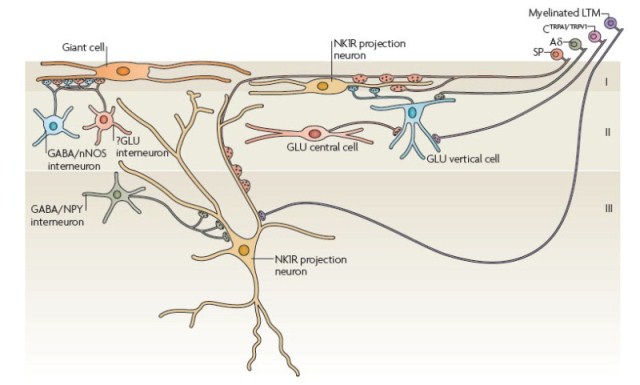
Scientists have long theorized that pain signals are sent from sensory neurons in the limbs and other extremities to transmission neurons in the spinal cord, which then relay the information to the brain. At each of these three steps–extremities, spinal cord and brain–the pain information can be altered or even blocked before being relayed onward through the nervous system to the brain. The circuitry in the spinal cord is particularly important, as it is able to gate painful stimuli, thereby acting as a checkpoint between the body and the brain to make sure that only the most important pain signals are transmitted.

Previous studies had determined that two types of sensory neurons appeared to be involved in these circuits: pain receptors and touch receptors.

In their new study, the Salk and Harvard researchers set out to precisely identify the spinal neurons involved in these circuits. They deciphered the role each of two neuronal cell types play in the processing of pain signals in the dorsal horn, the location where the sensory neurons connect with the spinal cord.

The scientists discovered that a class of mechanoreceptors in the skin that detect painful mechanical stimuli are part of a feedback circuit in which excitatory neurons that produce the hormone somatostatin are inhibited by neurons that synthesize dynorphin (a natural analgesic molecule that produces effects similar to opiates). The inhibitory neurons they identified appear to control whether touch activates the excitatory neurons to send a pain signal to the brain.

This finding begins to explain how a light touch can cause discomfort in someone with allodynia: if something is awry in the pain circuitry, then the sensations of touch that normally travels through the mechanoreceptors could instead activate other neurons that trigger a pain signal. Similarly, mechanoreceptor fibers that project to the spinal cord from a missing limb might spur erroneous pain signals.

“Normally, only pain receptors are involved in sending pain signals to the brain, but when the spinal dynorphin inhibitory neurons are lost, touch sensation are now perceived as painful,” says Goulding, holder of Salk’s Frederick W. and Joanna J. Mitchell Chair. “This really opens the door to understanding what’s happening in these pain disorders where the cause of the pain is seemingly innocuous or not known. It could be that something has gone awry in how this spinal circuitry is operating, so sensations become jumbled together and emerge as pain.”

Story Source:


The above story is based on materials provided by Salk Institute for Biological Studies. Note: Materials may be edited for content and length.

Journal Reference:

Bo Duan, Longzhen Cheng, Steeve Bourane, Olivier Britz, Christopher Padilla, Lidia Garcia-Campmany, Michael Krashes, Wendy Knowlton, Tomoko Velasquez, Xiangyu Ren, Sarah E. Ross, Bradford B. Lowell, Yun Wang, Martyn Goulding, Qiufu Ma. Identification of Spinal Circuits Transmitting and Gating Mechanical Pain. Cell, 2014; 159 (6): 1417 DOI: 10.1016/j.cell.2014.11.003


http://www.sciencedaily.com/releases/2014/12/141205142349.htm

Wednesday, May 24, 2017

Neuropathy In A Nutshell


Today's post from painpathways.org (see link below) is a concise and useful summary of neuropathy for all those looking for a quick all-round, accurate description of the condition. Trustworthy and absolutely worth a read.


Unravelling the Mystery of Neuropathy to Manage the Illness 

Posted: July 2, 2014
 
Peripheral neuropathy - neuropathy…nerve damage – none of these may be terms you are familiar with. Neuropathy refers to diseases of the peripheral nervous system, and it affects over 20 million — or 1 in 15 — adults or children in the US.

What is Neuropathy?

According to The Neuropathy Association, neuropathy results when the peripheral nerves—those nerves that carry signals back and forth between our brain and the rest of our body—are damaged. This nerve pain impacts the body’s ability to communicate with itself: it’s as if the body’s wiring system has gone haywire. Managing the illness begins with first understanding it – and getting a good diagnosis and treatment plan in place.

What are the Symptoms?

Neuropathy’s early warning symptoms include: numbness, tingling, imbalance, weakness, and pain in the hands and feet. The symptoms also vary depending on the peripheral nerves involved: motor, sensory, and autonomic nerves.

Over 300 people with neuropathy recently helped The Neuropathy Association to create this Neuropathy Word Cloud – a powerful, visual, representation of what it is like to have neuropathy – and help the public better understand the human toll of this disease.

What are the causes?

Of the over 100 known types of neuropathy, diabetic neuropathy represents over a third of all neuropathies, making diabetes the leading cause. A third of neuropathies are “idiopathic” – or of an unknown cause. Other neuropathies include autoimmune conditions, hereditary, cancer or chemotherapy-related, entrapment or trauma-related, and neuropathies related to causes such as toxin-induced, nutritional deficiencies, gastro-intestinal disorders, metabolic diseases, or infectious diseases (including Lyme and HIV/AIDS).

How is it diagnosed?

If you suspect you may have this illness, it is important that you work with your primary care doctor to get a referral to a neurologist specializing in neuromuscular diseases. These neurologists are trained to diagnose and help people with diseases such as neuropathy, muscular dystrophies, and amyotrophic lateral sclerosis, among others. Getting an early and accurate diagnosis is the key to providing symptom management to restore quality of life and stem neuropathy’s progression.

Some tests that may be recommended after a complete neurological evaluation include:

* Electrodiagnostic tests (e.g., electromyograms or EMGs; and nerve conduction studies or NCSs)

* Skin biopsy

* Autonomic tests

More details about what these tests entail can be found here.

How can it be treated?

According to The Neuropathy Association, the only treatments available for the over 100 forms of neuropathy are aimed at treating the underlying medical conditions that cause the neuropathy, or treating the symptoms such as neuropathic pain. None treat the actual nerve fiber dysfunction or fiber loss, or help nerve fibers regenerate. Patients are encouraged to work with their health professionals to address the balance issues, muscle weakness, etc. with physical therapy. It is important to incorporate a multi-disciplinary approach to improve function and quality of life.

There are currently FDA-indicated medications for only a handful of neuropathies, as well as several more medications in clinical research development. For this reason, raising awareness so that more funding will be allocated to neuropathy research for more treatments and cures is critical. It is also important to help family members, friends, and the public at large to better understand neuropathy – this is as much about getting the support, understanding, and care people with neuropathy need as it is about changing the public’s perception of the neuropathy epidemic.

http://www.painpathways.org/unraveling-the-mystery-of-neuropathy-to-manage-the-illness/

Wednesday, May 17, 2017

Reasons Why Patients Should Join In With Social Media


Today's post from kevinmd.com (see link below) looks at the possibility of blogging for people living with chronic health issues. This blog also started for many of the same reasons described below and has grown into a large source of information for other neuropathy patients. I have learned so much from doing it and it has certainly provided a daily purpose in life to distract me from the ever-present neuropathy. Why not read Kevin Campbell's article and give it a go yourself - social media is not always intrusive; it can be very therapeutic as well.

4 reasons why patients should blog
KEVIN R. CAMPBELL, MD  JUNE 3, 2013

Social media has opened a whole new world for patients. Now, information about disease is readily accessible and available to everyone. Certainly, there are issues with reliability and accuracy of internet sources and this can create uneasiness and misunderstanding for both physician and patient.

However, the internet can also provide many new therapeutic possibilities. In particular, online support groups, twitter chats and blogging can provide a positive outlet for patients suffering with disease. Today, I want to focus on one of these Internet opportunities: the patient blog. Recently, a online article on iHealth Beat explored this concept of patient blogging and its benefits.

Just as commonly experienced in the climax and resolution phase of Greek tragedy, writing a blog about one’s experience as a patient can be cathartic. Patients with chronic illnesses or with a new diagnosis are often confused, frightened and angry. Numerous studies in the psychiatry literature have demonstrated that journaling or writing about one’s feelings and experiences can have a very positive effect on emotional health. Journaling has been shown to have several other unexpected benefits as well. In the age of the Internet and social media, journaling is now called blogging. Blogging can be a private posting (where only you or those you approve can see) or can be made public for anyone to see.

Blogging can have many benefits that are very similar to journaling. From a pure neuro-biological standpoint, while you are occupied with writing, the analytical left brain is engaged in the writing process. This allows the right brain to be free to feel, emote and create. In this setting, you are able to better understand yourself and the world around you. Specifically, there are four distinct benefits that patients can receive from blogging that I believe are worth mentioning:

1. Blogging helps to clarify thoughts and feelings. Often writing down our feelings provides a way for us to better organize our thoughts. Blogging can help patients with terminal illnesses better understand their disease and how they are reacting or adjusting to the challenges of the diagnosis and/or therapy.

2. Blogging helps you to get to know yourself better. Writing routinely will help you better understand what makes you happy and content. Conversely, writing will also help you better understand what people and situations upset you. This can be incredibly important when battling chronic disease. It is important that you are able to spend more time doing the things that make you happy and are able to identify and avoid things that are upsetting.

3. Blogging helps you to reduce stress. Patients who receive a diagnosis of a major illness or who suffer daily with the challenges of chronic disease often have a great deal of anger and resentment. It is human nature to ask questions such as “why me?”. Blogging about angry feelings can be a positive and therapeutic release of emotion. It allows for the writer to return from the blog more centered and better equipped to deal with negative emotion

4. Blogging helps unlock your creativity. Often we approach problem solving from a purely left brain analytical perspective. This is how we are taught throughout our education to attack problems in math and science in school. However, some problems are only solved through creativity and through the use of a more right brain approach. Writing allows the right brain to creatively attack problems while the analytical side of the brain is occupied with the mechanics of the writing process.

I believe that blogging can be just as important as medication compliance in patients with chronic disease. The diagnosis of a chronic disease can produce a great deal of stress and emotional angst. Patients who are able to deal with negative feelings and emotions in a more positive way are better suited to tackling their health problems.

As mentioned above, blogging has many benefits on our emotional health. By dealing with negative emotions and unlocking creativity, we are better able to deal with the realities of chronic disease and more effectively interact with friends and loved ones. I encourage everyone–patient, physician, family member or friend–to begin to blog. I expect that the health benefits of writing will be well worth the time in front of the computer screen and the insights that you may discover about yourself may be be life changing.

Kevin R. Campbell is a cardiac electrophysiologist who blogs at his self-titled site, Dr. Kevin R. Campbell, MD.

http://www.kevinmd.com/blog/2013/06/4-reasons-patients-blog.html

Tuesday, May 2, 2017

Tips For Neuropathic Footware Time To Throw Out The Old And Break In The New!


Today's post from everydayhealth.com (see link below) looks at finding the best solutions for your burning, tingling or numb feet. That requires finding shoes that will provide the best support and the most comfort - no easy task. If you, like me, are still wearing the same sneakers you bought 5 years ago, even though they're falling apart but are so damned comfortable, your conscience will be pricking you that it's really time for a new pair. That's a big step for the neuropathic foot - literally because new shoes can provide all kinds of torture to the healthiest of feet until they're broken in. This article gives some excellent tips - both practical and with the nerve damaged feet in mind. 
 
Shoe Shopping With Diabetes 
By Mary Elizabeth Dallas, HealthDay News
Medically Reviewed by
Farrokh Sohrabi, MD

 
If you have diabetes, choosing the right shoes can help protect your feet from injury. Learn which styles could put you at risk for complications.

If you are living with diabetes, shopping for shoes is more than a matter of style. By following some simple guidelines to ensure a good, comfortable fit, you can prevent potentially serious foot problems.

Even minor foot problems, like calluses or blisters, can lead to serious diabetes-related complications. Diabetes can cause poor blood flow to your feet, making it more difficult for wounds to heal, sometimes resulting in infections and possibly amputation. Complicating matters, poorly controlled diabetes can also lead to nerve damage called peripheral neuropathy. This may cause you to lose sensation in your feet, so you may not feel potentially harmful cuts or blisters. To help protect your feet and overall health, it's important to know what to look for in diabetes shoes.

"It's all about prevention," said Katherine Dux, DPM, a podiatrist at Loyola University Medical Center in Maywood, Ill., who treats patients with diabetes. "Any friction in the shoe could lead to irritation and possible blister formation. This could lead to trouble down the road."

Before you shop for diabetes footwear, it's important to have your feet evaluated by a podiatrist to determine your risk for infections or complications, said Dr. Dux. Based on this assessment, the doctor can recommend exactly which types of shoes will be best for your feet.


What to Look For in Diabetes Footwear

Even if your diabetes is under control and your feet are healthy, there are a number of factors you should consider when selecting shoes. By looking for certain characteristics and avoiding others, you can protect against irritation, infections, ulcers, and potentially worse foot problems.

First, look for a shoe that has a large enclosed front, as well as a closed back and top. Shoes that expose your toes or heels increase your risk for injury and infection. You may love slip-on shoes, sandals, clogs, and mules, but they could trip you up when it comes to diabetes foot care.

Other good shoe features for a person with diabetes include:


Adjustable Closure. Look for shoes that have laces or Velcro. The built-in flexibility allows you to tighten or loosen your shoes depending on whether or not your foot is swelling.

Wide Toe. Steer clear of shoes with narrow or pointed toes. "It's best to stay with a shoe that has a wider toe box area as well as something with increased depth to the toe box," advises Christina Sigur, DPM, a podiatrist at Wake Forest Baptist Medical Center in Winston-Salem, N.C. Shoes with a round or wide toe box provide your feet with more room and are less likely to cause irritation.

Low Heel. Flats or shoes with heels less than two inches high are a better option than shoes with higher heels. Lower-heeled shoes reduce the amount of pressure applied to the ball of the foot.

Soft Material. Choose styles made from soft materials, such as leather, mesh or a pliable synthetic fabric. Since feet tend to swell throughout the day, these softer fabrics will give and allow for swelling. Breathable fabrics will also prevent the build up of moisture within the shoe, Dux added.

Cushioned Inner Sole. It’s important to choose footwear with a good amount of cushioning inside the shoe. This added support helps reduce foot pressure and the risk for developing foot ulcers, or sores, and other complications, Dr. Sigur noted.

Hard Outer Sole. Although the inside of your shoe should provide support with cushioning, the outer sole of any shoe you select should be hard. This will help protect your feet from rough or sharp objects and provide shock absorption.


When to Use Therapeutic Diabetes Shoes

For some people with diabetes, a podiatrist may recommend therapeutic shoes. "People with foot deformities, such a hammer toes and bunions, are at greater risk for irritation from ill-fitting shoes," Dux said.

Therapeutic shoes are advisable for anyone with diabetes who also has a history of any one of the following:
An amputation of any part of their foot or toe
Foot ulceration
Calluses that lead to an ulceration
Neuropathy or nerve damage
A foot deformity such hammer toes, bunions, flat feet, or high arches
Poor circulation in their lower extremities


At the Shoe Store

If it’s time for some new kicks, consider shopping later in the day. Since feet tend to swell throughout the day, Dux recommends visiting the shoe store in the afternoon or evening in order to get a more accurate sizing of your foot.

And don’t forget to bring your socks. Experts recommend that people with diabetes wear socks to decrease the friction in shoes and soak up extra moisture to prevent infections. To ensure a proper fit, it's important to always try on shoes with the socks you intend to wear with them.

Finally, ask a trained sales professional to measure both of your feet. One foot is typically larger than the other. You’ll want to determine which one is longer and base your shoe size off of that foot to get the best fit.


Other Ways to Protect Your Feet

Consider Fit, Not Fashion. The type of shoes you wear should have less to do with fashion and have everything to do with proper fit. "Shoes should feel comfortable from the moment you put them on,'" Dux said. "There is no true break-in period for shoes." Dux adds that shoes should never feel tight, rub, or cause irritation.

Inspect Your Feet Daily. It's important to routinely remove your shoes and inspect your feet for problems or signs of irritation, such as redness or marks along the top, sides, or sole. This is particularly true when wearing new shoes. "Any areas of redness or marks that do not resolve in 10 to 15 minutes could be an indication that the shoes need to be addressed or adjusted," Dux noted.

Visit a Podiatrist Regularly. People with diabetes who do not have any foot problems should still be evaluated by a podiatrist annually. Anyone diagnosed with peripheral neuropathy — or those with a history of calluses or foot ulcers — should be reassessed more frequently, according to experts.

Know When to Buy New Shoes. Whether or not to replace a pair of shoes depends on how often you wear them. For everyday shoes, however, Sigur says a good rule of thumb is to change them at least once a year since the interior cushioning of the shoe wears down over time.

http://www.everydayhealth.com/type-2-diabetes/living-with/shoe-shopping-with-diabetes/