Showing posts with label to. Show all posts

Friday, August 18, 2017

Glutes How to Transition From Exercise to Run


You've been told you have weak glutes. Whether it's hip pain, knee pain, ankle pain, it all can be "healed" by improving glute strength. You are prescribed clams, side lying leg lifts, bridges then progressed to squats and lunges. You feel stronger and released to go for a run. Your symptoms feel better but returns after getting back to your routine.

Recruiting Glutes vs. Quads

Is your strength transferring from a basic clam exercise to running? Are your glutes REALLY activating when you run? For most of us, we are very quad dominant. This means we over use our quadriceps when we should be using other muscles such as our glutes. Our sedentary lifestyle of sitting at work or relaxing on the couch has us disengaging our glutes. The quads have at a mechanical advantage to work. Also, the habitual use of quadriceps enhances the neural input from the brain is going to the quads and not the glutes. In other words, the wiring to the quads is better then wiring to the glutes. When running, demand on the muscles is so high we use whatever muscles are the easiest to recruit. The Quads.


I have seen and used different cues such as "stick out your butt"or"squeeze your butt as you stand up". However, most of my patients and clients have a difficulty "feeling the exercise". AND, the improved strength doesn't seem to translate to running.

PUSH YOUR KNEES BACK

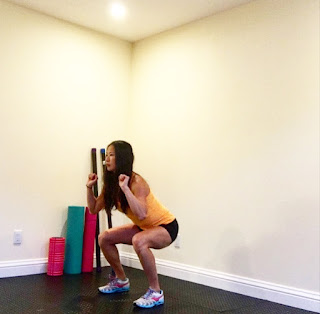
I have been using a different cue to activate the glutes while performing standing exercises such as squats and lunges. While you are performing squats or lunges (or any standing hip exercises i.e. box step ups), pretend like there is an object behind your knee and push back as you stand up. The gluteus maximus is responsible for hip extension, getting your thigh behind you body. However when your foot is fixed on the ground and the knee is given the cue to push back, this extends the knee AND hip. This will engage your gluteus maximus.


Stand up and perform a squat. When you stand up, you feel your thighs press down into the ground and push up. Now try a squat but give the cue for your knees to push back.

FEEL the burn in your glutes.

Now, think of this cue when running. You want to let your knee land normally (with a soft bend), then push back with the knee as your body is moving over your leg. You should feel like your legs are moving in a circle, almost like pedaling a bike. At first, I recommend incorporating this during a warming up, then into sides and finally into your short normal runs. The best way to feel this is up hill sprints!
THIS CUE WORKS BEST IF YOU MIDFOOT OR FOREFOOT STRIKE!

So on top of performing clams, leg lifts and squats add this "push your knee back" cue to the standing exercises.

Please contact me if you have any questions or concerns.

Saturday, July 22, 2017

Pain in the Brain A Guide to Chronic Pain


Today's useful Australian animated video shows you precisely why the pain you have when afflicted by neuropathy (amongst other diseases), is called Chronic Pain. Always handy to know the basics!

"Brain Man" A collaborative video made by The Hunter Integrated Pain Service and GP Access

Thursday, April 13, 2017

Biofeedback to Help Control Neuropathic Pain


This is the fifth article from 4therapy.com (see link below) in a week-long series looking at the psychological aspects of having chronic pain in your life. Today's post looks at bio-feedback as a means of controlling how your body reacts to pain. It's an interesting idea but the fact that you will need a willing professional therapist to monitor your progress may make it difficult to achieve for many people. These therapies are rarely part of your medical insurance package and may be too expensive for many people who are already having to cover the bills associated with HIV and neuropathy. Definitely worth a read.


Biofeedback: Controlling Pain with Less Need for Medication

When pain kicks in, so does stress and tension. As the pain builds, we unconsciously clench our muscles, respiration and heart rate accelerates, and skin temperature drops. As the pain builds, our bodily tension response only serves to worsen our experience of that pain.

Fortunately, although pain causes unconscious bodily reactions, we can learn to regulate our body and perform relaxation exercises that can counter this tension response and reduce feelings of pain.

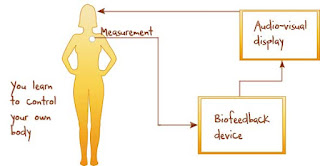
Biofeedback is a technique that helps people recognize how pain causes changes in their body. It teaches people exactly how, when and where to relax. Once people can recognize what pain does, they can learn to control this reaction and reduce the experience of pain.

How Does Biofeedback Work?

A biofeedback therapist uses instruments that measure bodily responses such as muscle tension or breathing rate. A patient who experiences pain while hooked into biofeedback instrumentation can see when, where and how their body reacts to pain. The patient receives immediate feedback about biological responses to pain. Once patients see what pain does, they can learn to control it.

During a session of biofeedback, for example:

1. A person suffering from headaches caused (or in part caused) by tension might benefit from muscle tension biofeedback.

2. The therapist would affix electrodes that measure muscle tension during a headache, and the patient would be able to see, in real time, changes in muscle tension in different parts of the body.

3. Once a patient can see how and where pain causes increased muscle tension, they can learn how to relax those muscles and see through the instruments how relaxation results in reduced muscle tension. They can also feel how reduced muscle tensions results in reduced pain.

4. Eventually, the patient learns how to recognize and relax muscle tension caused by pain without the need for instruments.

What Does Biofeedback Measure?

Pain can trigger the sympathetic nervous system, which can in turn result in the following:

• Shallow and rapid breathing

• Increased muscle tension

• Increased heart rate

• Sweat

• Feelings of stress and anxiety

• Increased blood pressure

A sympathetic nervous system response is also known as a “fight or flight” response. Although it is a survival mechanism for moments of real danger, when pain stimulates this sympathetic reaction, it only serves to worsen the feelings of pain. Biofeedback is a technique that teaches patients to retain conscious control over the unconscious reactions of the sympathetic nervous system.

A biofeedback therapist may choose to use different instrumentation, depending on the source of pain and the needs of the patient. Bodily responses measured can include:

• Muscle tension. Using an electromyography machine during biofeedback sessions, a patient learns to reduce muscle tension in different areas that can cause increased pain. The electromyography machine measures electrical activity in the muscles, which in turn reveals the degree of muscle tension. The instrument reveals any small increases in muscle tension, helping the patient learn to immediately and fully relax.

• Skin temperature. Pain and stress can lead to falling skin temperature, and when alerted to this through the use of thermal temperature sensors, biofeedback patients can actually learn how to increase skin temperature.

• Brain waves. An electroencephalogram (EEG) machine reveals brain wave activity. Patients can learn to reduce brain waves associated with pain responses. This is also known as neurofeedback.

• Breathing. A respiration measuring instrument denotes breath rate and intensity.

• Sweat. Galvanic measurement instruments on the skin reveal any increase in perspiration. This type of biofeedback is used particularly for anxiety-related disorders.

What Conditions Respond Well to Biofeedback

Pain disorders that may respond well to biofeedback therapy include the following:

• Carpal tunnel syndrome

• Headaches (biofeedback can help patients with a variety of headache subtypes reduce the intensity of their pain and avoid worsening the experience of pain through increased tension; biofeedback of temperature and muscle tension types are often used)

• Lower back pain

• Joint pain

• Arthritis

• Fibromyalgia

• Temporomandibular disorders

• Lupus

• Neuropathy

• Prostate infections

• Myofascial pain

Biofeedback also works well for conditions beyond chronic pain, such as addiction, anxiety, insomnia and depression.

What Is a Biofeedback Session Like?

A biofeedback session can take place in a variety of health clinics. A session typically lasts for an hour or less, and it is not an uncomfortable experience.

Patients are connected to the measuring instrumentation and see or hear visual or auditory cues that indicate change in whatever is being measured (tension or breathing, for example). Patients then try through learned techniques to control their bodily reaction, and can see how well they control it through the instrument’s display response.

Ultimately, after repeated biofeedback sessions, patients learn to recognize these physical changes without the need for instrumentation.

Biofeedback Works Best as an Adjunct Therapy

Studies have shown that biofeedback is most effective when applied as a complementary or adjunct therapy to other forms of pain management, particularly when used as an adjunct to cognitive behavioral therapy (CBT). Biofeedback increases personal feelings of control over pain, which ties in well with the message of control delivered through the application of CBT.

Does Biofeedback Work?,

Biofeedback is an accepted complementary pain management therapy that has been clinically studied and proven to work better than placebo.

Some people find biofeedback difficult to master. People who do gain mastery over the technique do not find any appreciable pain relief from it. Others find it quite helpful.

Biofeedback is a low-risk, worthwhile complementary pain management therapy that does not conflict with other forms of pain control. Most practitioners recommend biofeedback therapy as part of a comprehensive biopsychosocial approach to the management of pain.

http://www.4therapy.com/life-topics/chronic-pain/biofeedback-controlling-pain-less-need-medication-3010